On Tuesday, Trump delivered the 2026 State of the Union address. The exceptionally long speech covered an array of topics, ranging from self aggrandizement, to chastising the Democratic party. In the midst of a wide array of topics, Trump highlighted the presence of Sage Blaire and her grandmother Michele at the address, and promoted Sage’s Law, a piece of proposed anti-trans legislation in Virginia.
The details of Sage’s story are complex, and have been previously covered in greater detail by Evan Urquhart for Assigned Media here. Briefly, in 2021, 14-year old Sage confided in school counselors that she identified as a boy. The counselors allegedly responded affirmatively, encouraging her to go by a chosen name and saying she could use boy’s restrooms at school. Two weeks later, Sage ran away from home and was allegedly kidnapped, trafficked, and sexually assaulted. Following her rescue, Sage allegedly gave up her trans identity and returned to identifying as a girl.
In the wake of these traumatic events, Michele, who had adopted Sage at the age of 2, sued the school, alleging that these events would never have occurred had the school informed her of Sage’s desire to transition. In the years following, In 2023, Virginia Republicans introduced Sage’s Law, a piece of legislation which would codify just that. The law has been blocked by Democrats.
It is impossible to know whether the school outing Sage would have prevented these events from happening to her, as many specifics of what happened and why remain unclear to this day. What we do know is that forced outing carries its own sets of risks and dangers, especially when faced with non-affirming parental figures, such as Sage’s grandmother.
Trump’s invitation of the Blaire family and highlighting of their story may signal his intention to further escalate attacks on trans Americans.
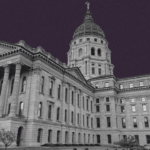
Kansas enacted one of the nation’s most aggressive anti-trans policies this week. On Thursday the 26th, SB244 came into effect immediately, following the overturning of Governor Laura Kelly’s veto. This law attacks trans Kansans’ rights on a broad front, establishing both a bathroom bounty as well as immediately and retroactively invalidating any state identification with a gender marker not matching a person’s gender assigned at birth, including legally changed driver’s licenses and birth certificates.
The effects of the sudden revocation of citizens’ licenses are far reaching, with concerning implications. Immediate effects include a sudden inability to legally drive, including to any office where someone might need to go to reinstate their license; as well as risks to employment for anyone who might rely on the ability to drive for work, ie. for a commute or commercial driving. This also raises concerning questions regarding access to vote, as Kansas is one of many states that requires a valid photo ID in order to vote. In this same legislative session, Kansas also repealed the Mail Ballot Election Act, which standardized access to mail-in voting in the state.
The following day, the ACLU announced that they had filed a lawsuit against the state on behalf of two trans Kansas residents affected by the law, calling the law “cruel” and “a direct attack on the dignity and humanity of transgender Kansans.” The suit asserts that the law is in violation of the Kansas Constitution’s protections of “personal autonomy, privacy, equality under the law, due process, and freedom of speech.”