“When we think about what it looks like in 2024 in the United States to be a trans person, your ability to inhabit that body becomes the subject and the site of social and legal control.”
That’s Chase Strangio’s opening line in the documentary Heightened Scrutiny, directed by Sam Feder. Released last year in the wake of the Supreme Court’s ruling on US v. Skrmetti, the film follows ACLU attorney Chase Strangio’s life in the months leading up to his landmark brief at the Supreme Court, and also features many prominent members of the trans press and legal circles, including a guest appearance from Assigned editor-in-chief Evan Urquhart.
Unfortunately, the film is hard to get a hold of. The documentary has seen limited screenings, is not currently available on streaming or rental services, and is nearly impossible to track down through other means as well. If you missed the very brief periods in 2025 when it was available online, you may be out of luck.
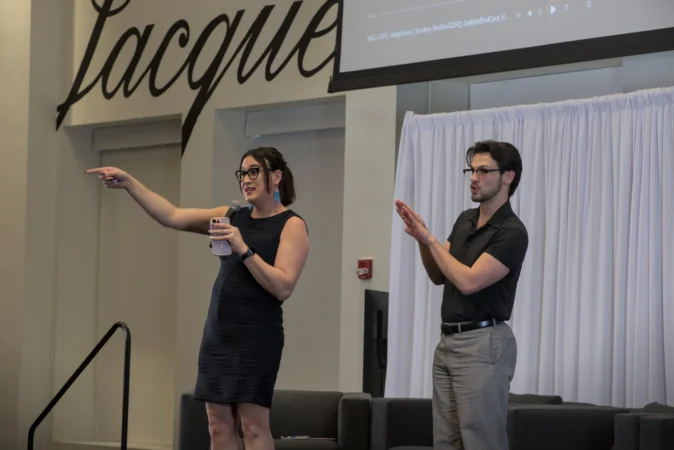
Chase’s legal team did not win their case, and the Court ruled that trans folk were not entitled to equal protection under the law. As Dr. Corey Lascano (she/they) put it, “our current moment is grim, and it’s heavy with the weight of grief and fear as we see our rights being taken away almost daily.”
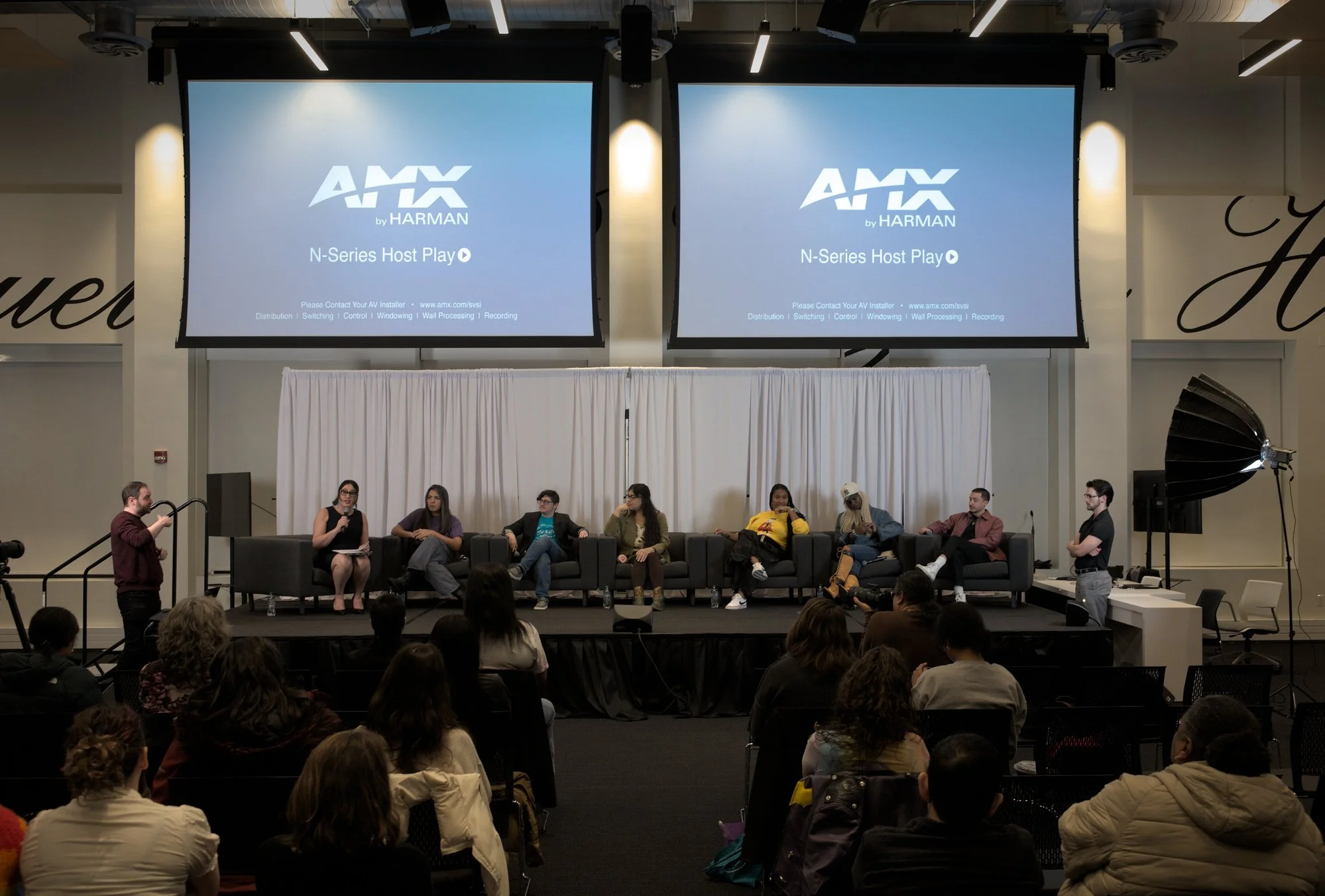
After the film, Dr. Lascano led local trans advocates and community leaders in a panel discussion that was, as they insisted, “not about despair. It is about hope, that is driven by action.”
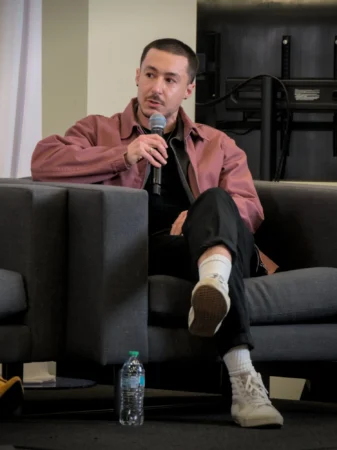
Milo Vieland (he/him), Trans Health Law Program Coordinator at Legal Council for Health Justice, gave some expanded context to Skrmetti’s ongoing effects, stating “One way that we’re seeing the effects of Skrmetti happening already are, there were a series of cases in federal courts around the country that were decided in favor of civil rights at the lower court level, and then the Skrmetti decision..came down, and the Supreme Court directed those lower courts to re-open those cases…saying to them, we now have this supreme court case that rolls back trans civil rights, and we want you to take a look at these decisions that you already made, because we think that the civil rights that you upheld there are no longer supported.”
One common misconception about Skrmetti is that the ruling does not outright ban trans youth healthcare; rather, it leaves the discussion on whether to ban care up to the states, As Vieland put it, “We know there’s often such a big difference between the law on the books, and what people are experiencing in real life…so I think so often that answers to questions about the law is less a question of ‘what is the law’.”
“The answer to legal questions is not strictly legal, it’s political.”
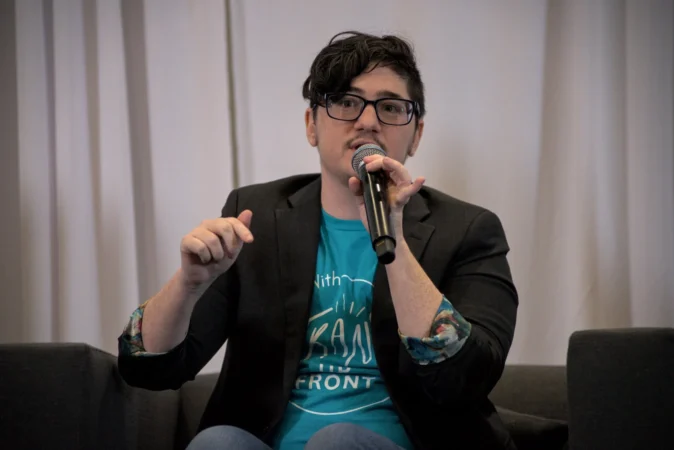
Asher McMaher (they/them), executive director of Trans Up Front, added, “Our organization founded the gender affirming navigation system for our state, and its not just this state, it’s all the states surrounding us, and everyone who’s trying to leave their states to access care, and one of the things I say so often is that we can’t become complacent about our sanctuary status.”
“Just over a year ago, Lurie Children’s was the first children’s hospital to roll back…and we’re watching it continue to snowball and roll. And we’re moving into a time where healthcare is turning into a place of privilege, paying out of pocket.”
“When we’re looking at cases like this, it’s giving people the ability to have a precedent to say ‘ope, you can’t have this either.’”
“The thing is that, we’ve endured…As we make it through this administration, despite these legal issues, I know in my heart–hopefully, I can’t do it without doing this work–that we’ll continue to endure and move forward.”

On the topic of systemic oppression and privilege, Channyn Lynne Parker (she/her), Chief Executive Officer of Equality Illinois, commented further on Illinois’ sanctuary status, saying, “I love this topic, because sometimes we treat (our status as a) sanctuary state a bit like a welcome mat. Like it’s just this thing that just kind of sits there as a platitude but not as something that we are taking concerted effort into installing state-wide.”
“Sanctuary state means nothing if the sanctuary does not reach your school, your clinic, your home, and even more narrowly your block.”
“Regardless of what policy may pass…young people, particularly black and brown trans and non-binary people still have the trauma….doesn’t translate into real life and what you said about lived experience. Policy should be the ceiling, but lived experience is the floor.”
“We need to narrow that gap between the two.”
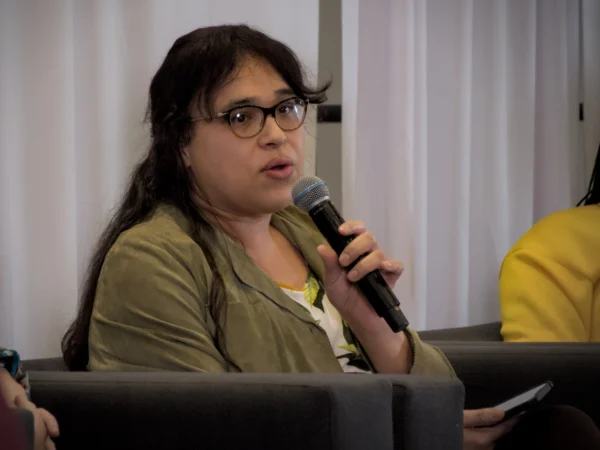
Reyna Ortiz (she/her), program director of Taskforce Prevention, added, “As an Indigenous person, I really do feel compelled to talk that gender variant people on this land here have been at war for five hundred years.”
“These are the kind of things we have to talk about, because these systems still exist. And not only have our communities evolved…but these systems have evolved to. And the same systems that used to feed people like me to the dogs four hundred and eighty years ago are still oppressing us, brutalizing us, and killing us.”
“I think we can have these conversations in a hundred different ways, but if we’re not addressing these systems that are putting us at risk…that are forcing our children to kill themselves, we are going to continue to have these conversations for another five hundred years.”
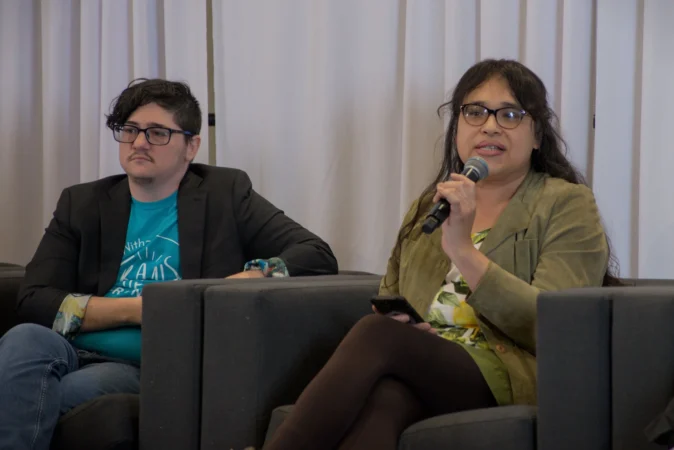
She went on, addressing income and housing inequality in the trans population in Chicago: “There are youth, fourteen, fifteen, sixteen year old trans kids sleeping on the streets. That is not safe, and there is nothing sanctuary about it..and until we start having these conversations and addressing systematic barriers, we’re still going to have these issues”
Channyn added, “Systemic oppression does not pause for progressive legislation. And I think oftentimes, we really do believe that..and that goes to show how far removed we can be.”
“If we don’t have resources that follow rhetoric, then what we do is for naught.”
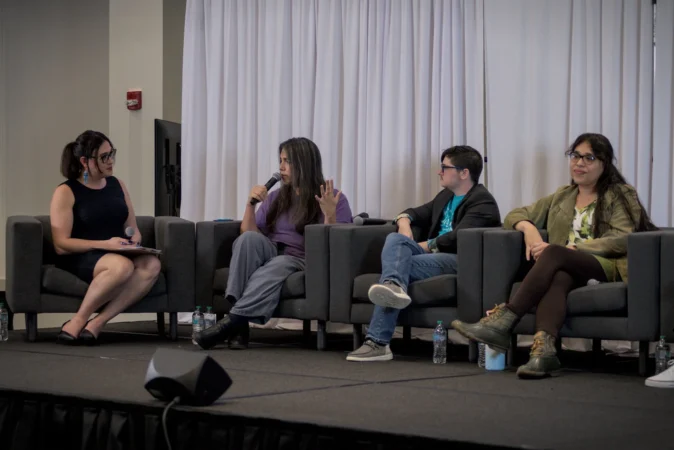
Albe Gutierrez (she/her/ella), art therapist at Chicago Therapist Collective, thanked Reina for acknowledging the Indigenous ancestry of the region and the gender-expansive history we all share, stating, “What has guided this wisdom through centuries is continuing to be examples of what is possible.”
“I think about who was I as a youth–a young person, a queer person, gender-expansive–and what led me to become the trans adult I am now, with the grey hair, and the aging!….is seeing that there is possibility. And I think that’s one of the strongest things adults can do for trans youth…is to ensure that there is an example of life for queer adults.”
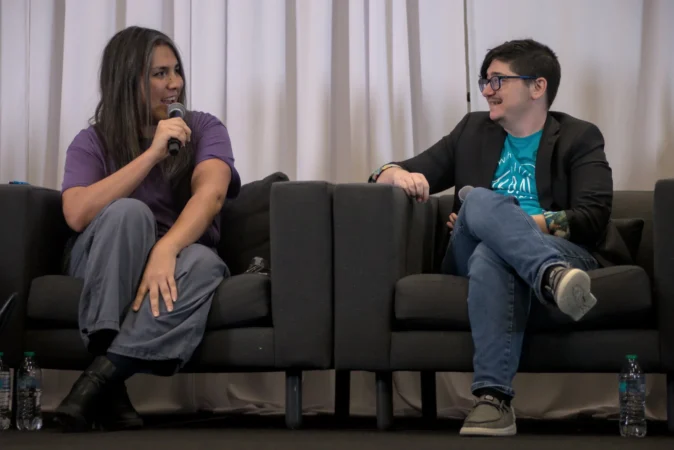
Speaking to those of us who may lose access to healthcare, and to those who may never have had access to that care to begin with, Albe quoted the late Chicagoan Aerin “Nefertiti” Pussy Cooper, who passed away in 2019: “I don’t need hormones, sister, because I am naturally transsexual!”
“There is something so brilliant about not needing to change to exist in your fullness…If medical transition might not be a possibility,” Albe reminded the crowd, “the existence of trans-ness exists beyond that.”
“Trauma tends to narrow our perspective, and shorten our sense of the future…and if we can practice expanding perspectives for queer people around us, especially trans youth, that goes a long way towards supporting their mental health.”
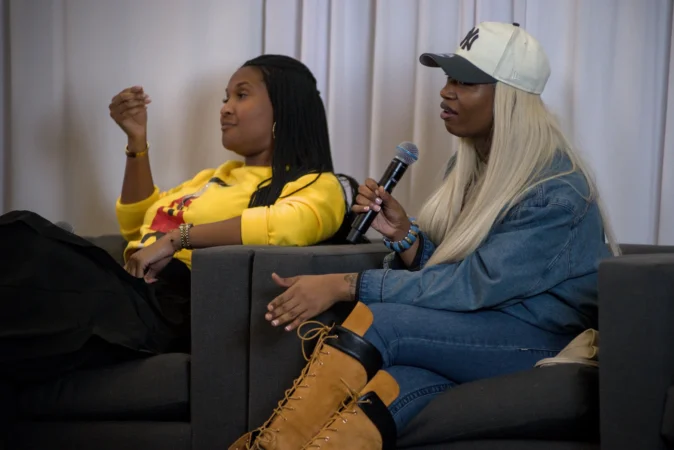
Skai Underwood (she/her), youth engagement specialist at TaskForce Prevention and lead facilitator at PrEP4Teens, spoke from her experiences being a mentor to trans kids: “You have to meet the youth where they’re at. And we can’t sit here and think that we’re gonna get their attention if they’re gonna sit here being lectured.”
“I teach about ballroom history at CPS Schools, teaching them about the history of queerness. That’s something that I feel like, it should be taught in classrooms, because that’s a part of black history. That’s a part of black and brown history, it’s a part of our history as Americans, to be honest.”
“That history should be taught….giving them courage, letting them know ‘hey, it’s okay, you’re not different, you’re just like everybody else’. I think that’s the biggest thing.”
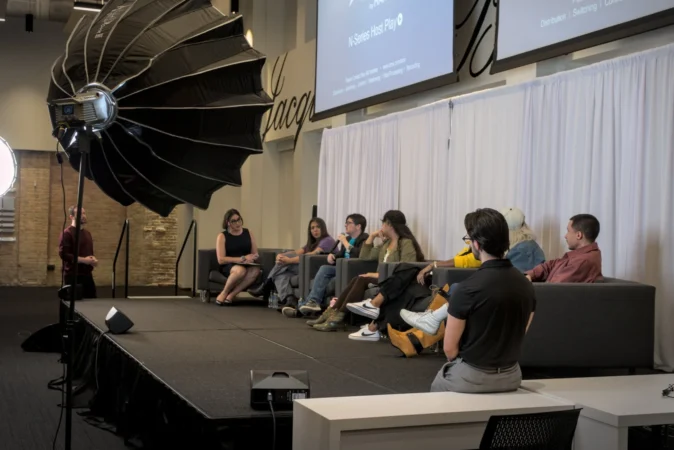
The screening and panel may have been one-night-only, but this won’t be the last we hear from these trans community leaders. Trans Day Of Visibility is coming up, and the fine folks at Trans Up Front (as well as multiple other Chicago-based organizations) are already planning a second follow-up rally to last year’s rally, which we covered here on Assigned.
Stay tuned, and stay safe.